
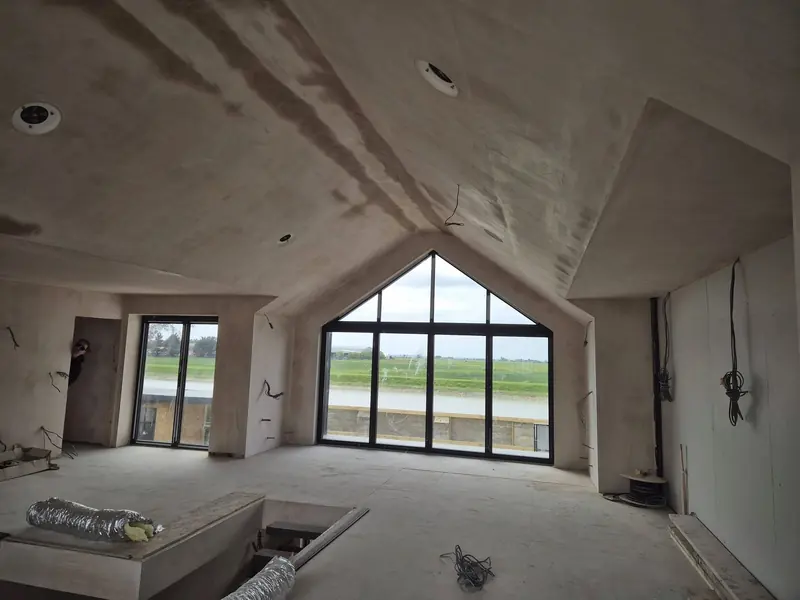
Dry lining for homeowners and builders
Dry lining means fixing plasterboard to walls, ceilings and timber or metal frames to create a flat surface, instead of building up wet plaster on the masonry. It's quick, clean and ideal for extensions, loft and barn conversions, new builds and rooms being reconfigured.
We dry line across Great Yarmouth, Gorleston, Norwich and Lowestoft, working directly for homeowners and alongside builders on their projects.
What we board and finish
- Stud partition walls to split or create rooms
- Ceilings, including vaulted ceilings in extensions and conversions
- External walls lined with plasterboard for a straight, true finish
- Extensions and new builds boarded throughout
- Renovations where old ceilings or walls have been stripped out
Finished ready to decorate
Once the boards are up, they're finished one of two ways. Usually they're skimmed: a thin coat of finishing plaster over the whole board for a hard, smooth surface (see plastering & skimming). The alternative is taping and jointing, where just the joints and screw heads are filled and sanded. We'll recommend the right finish for your project when we quote.
Choosing the right board
Plasterboard comes in different types for different jobs. Standard board suits most walls and ceilings, while moisture-resistant board is used in bathrooms and kitchens, and there are boards with improved sound or fire performance, or with insulation bonded to the back. Where building regulations apply, follow what your builder or building control have specified, and we'll fit to suit.